
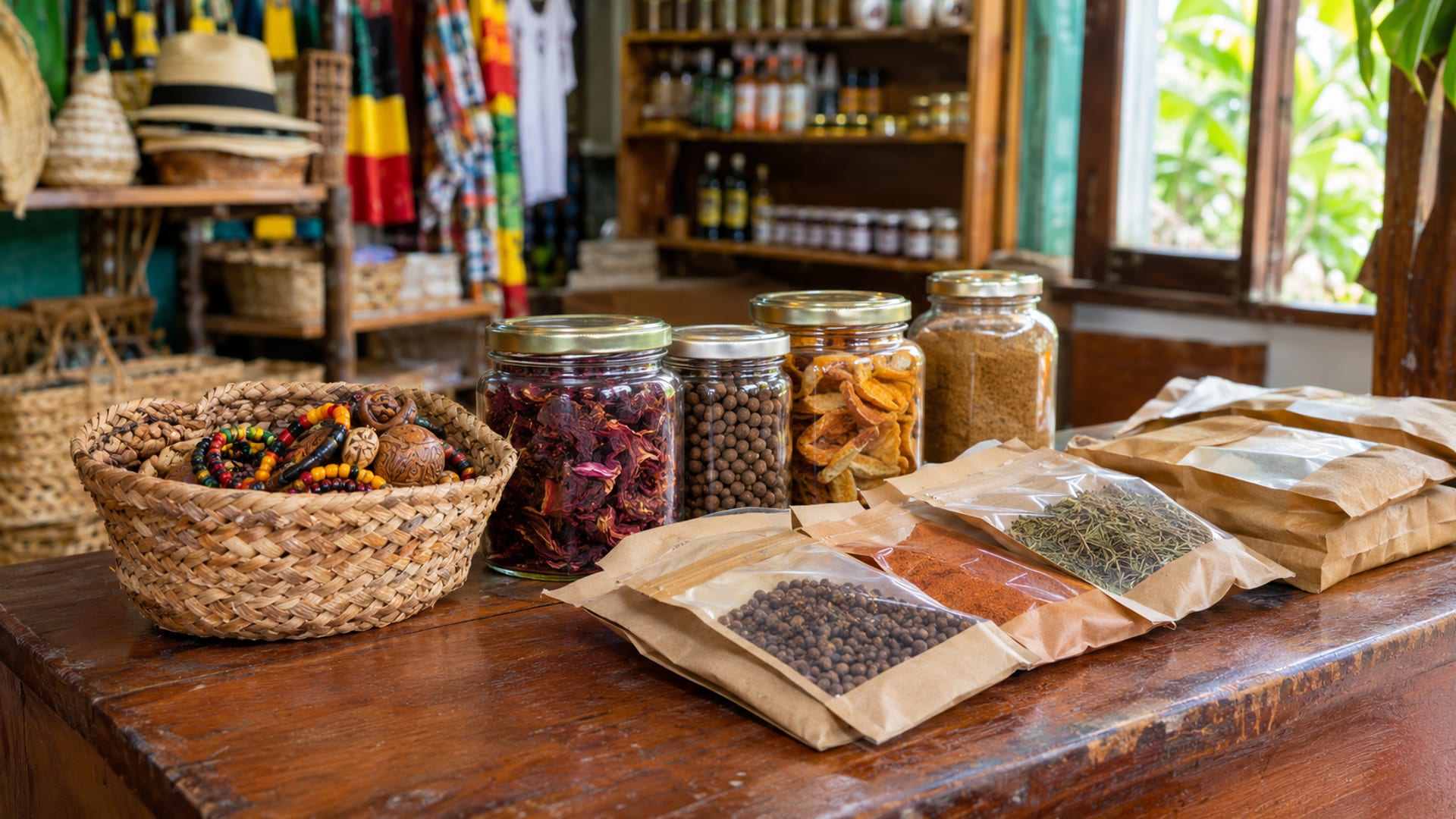
Start with your destination country, then choose the product type and the shop that suits it. Sealed coffee, sauces, spices, packaged sweets and labelled rum cake are usually simpler to pack than fresh food, plants, animal products or wildlife-derived crafts. For coffee, check for the Jamaica Blue Mountain® trademark. For every purchase, keep the receipt, retain the original packaging and declare food or agricultural products when you arrive.
Supermarkets, gift and souvenir shops, craft markets and liquor stores carry most of what visitors take home. The right shop depends on whether you want coffee and sauces, a handmade gift or a bottle of rum.
Start with the destination country
The same Jamaican product can have different entry rules in the United States, Great Britain and Canada. Before packing, separate food, alcohol, plants, animal products, crafts and possible wildlife materials. Check the current rule for the exact product and keep labels showing ingredients, weight and country of origin. If the haul will not fit in a suitcase, shipping a barrel to Jamaica: what it costs and how long it takes covers the other route.
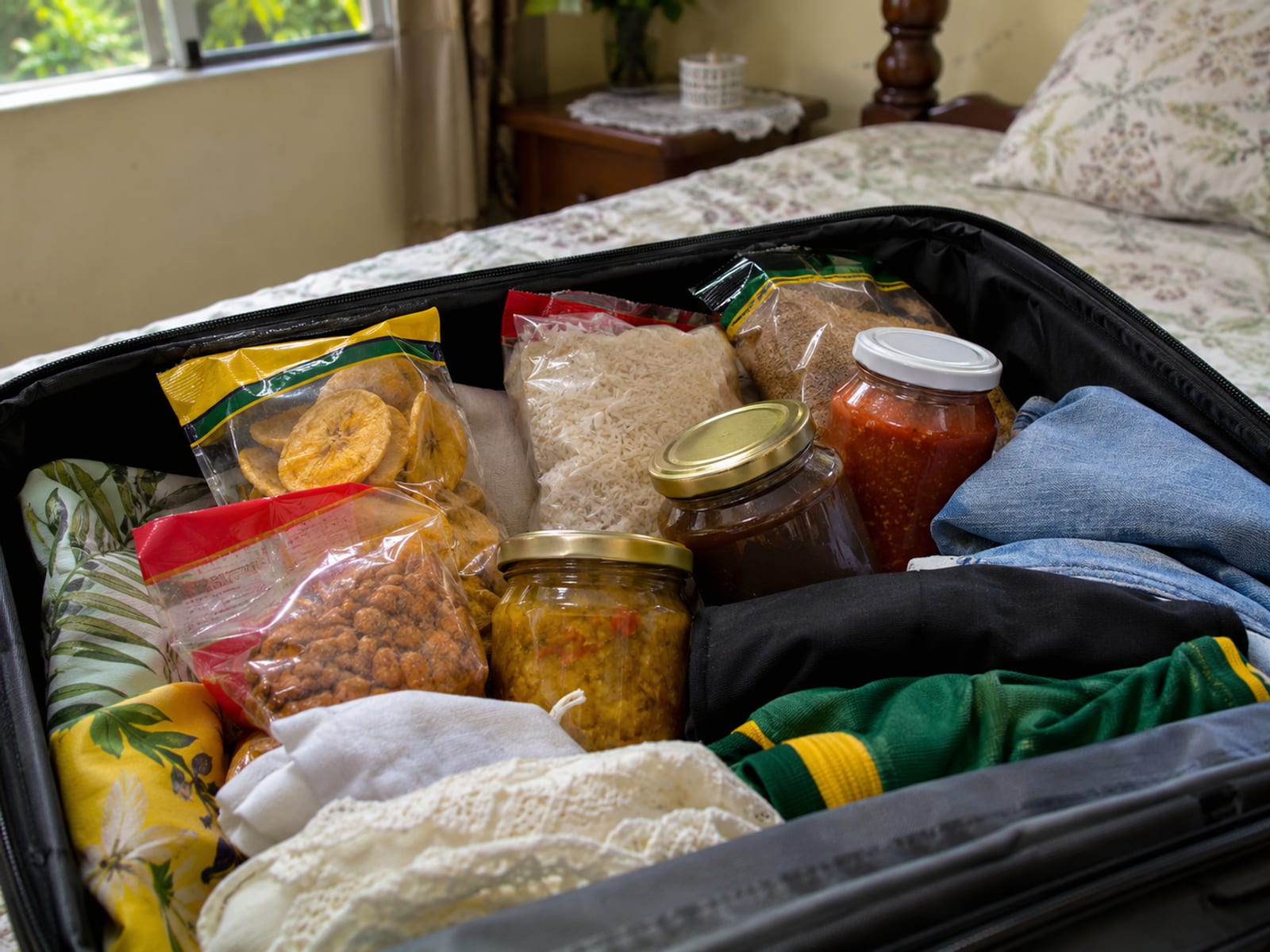
For the United States, Customs and Border Protection says many prepared foods are admissible, including spices, honey, coffee and tea. You must declare all food and agricultural products, even when they appear harmless. Meat, fresh fruit, fresh vegetables, plants, seeds, soil and animal products require particular attention. CBP’s food guidance and the USDA APHIS agriculture notice cover the categories that need closer checking.
For Great Britain, travellers arriving from Jamaica generally cannot bring meat, meat products, milk or milk-based products, subject to narrow medical and infant-food exceptions. Honey is limited to 2 kg per person. Most fruit and vegetables require a phytosanitary certificate, although Great Britain identifies certain exceptions, including pineapple, coconut, citrus, banana, plantain, mango, passion fruit, guava and dates. See the current Great Britain food rules and fruit, vegetables, nuts and seeds rules.
For Canada, the Canadian Food Inspection Agency requires travellers to declare food, plants, animals and related products. Its personal-use guidance lists spices, tea and coffee up to 20 kg, condiments and dressings up to 20 kg or 20 L, confectionery and snack foods up to 20 kg, and processed fruit and vegetables up to 20 kg or 20 L, subject to the stated conditions. Fresh, dried and cured meats from countries outside the United States are not permitted. Check the CFIA personal-use rules for the current requirements. For patties, ackee, jerk sauce and rum together, see Can You Bring Jamaican Food Home? Patties, Ackee, Jerk Sauce and Rum Through US, UK and Canadian Customs.
Jamaican food and drinks worth considering
Coffee
Jamaica Blue Mountain coffee and Jamaican High Mountain coffee are among the most recognisable purchases. JACRA regulates and standardizes Jamaica’s coffee, cocoa, coconut and spices industries. Through Coffee Marks Limited, its wholly owned subsidiary, it owns or administers the Jamaica Blue Mountain® and Jamaican High Mountain Supreme® trademarks.
Look for the Jamaica Blue Mountain® trademark or certification mark on the package. JACRA states that Coffee Marks Limited is responsible for the integrity and licensing of those brands, while JACRA licenses and monitors coffee dealers, manufacturers, processors and foreign importers. The JACRA coffee information and licensee information explain the marks and the licensed trade. To taste the coffee where it grows, see Blue Mountain Coffee Farm Tours and Where to Taste the Coffee.
A label that says “Blue Mountain style,” “Blue Mountain blend,” “Jamaican blend” or “Jamaican coffee” is not automatically 100% Jamaica Blue Mountain coffee. Before paying, ask:
- Is this 100% Jamaica Blue Mountain coffee or a blend?
- Does the package display the Jamaica Blue Mountain® trademark?
- Who is the licensed dealer or trademark user?
- What is the roast date and net weight?
- Is the coffee whole bean or ground?
Check the pack size, roast date, best-before date and whether the coffee is sealed for travel. A supermarket may carry everyday packs, while a gift shop may sell a presentation box. Compare the same brand, weight, roast and currency before deciding.
Jerk seasoning, sauces and spices
Jerk seasoning, jerk marinades, hot sauces and all-purpose seasonings are practical gifts because they are compact and usually sold in labelled packaging. Walkerswood’s product information identifies its jerk seasonings and sauces as Jamaican products made with Jamaican-grown herbs, spices and fruits. Pickapeppa’s official site identifies its Jamaican sauce range, including original, hot pepper, spicy mango and jerk marinades.
Dried pimento, nutmeg, ginger and jerk seasoning blends are also common choices. Check the ingredient label, net weight, best-before date and whether the item is shelf-stable. For a gift, compare a regular bottle with a boxed set by volume and price, not by packaging alone.
Rum cake, sweets and snacks
Rum cake, Jamaican black cake, packaged sweets and snacks can work well for travellers because commercially prepared products are easier to label and pack than fresh food. Check the ingredients carefully if the cake contains alcohol, dairy, meat-derived ingredients or nuts, since the destination country may apply separate rules.
Keep rum cake and sweets in their original commercial packaging. If a product needs refrigeration, ask the branch how it should be stored and how long it remains suitable after purchase. Pack breakable items between clothes or use protective packing if the shop provides it.
Rum and rum cream
Jamaican rum and rum cream are popular gifts, but alcohol allowances vary by destination, state, province and airline. The bottle should remain sealed, and you should check the rules for the country and place where you arrive. For Jamaican price comparisons, see Rum Prices in Jamaica: Supermarket vs Duty Free, and How Much You Can Take Home.
Ask the liquor store or branch about the bottle size, current J$ or US$ price, whether GCT is included, payment methods and protective packing. For bottles bought at the airport, duty-free shopping in Jamaica: the airport, the ports and the limits explains what the departure shops sell.
Crafts, clothing and locally made gifts
Locally made crafts can include wood carvings, woven baskets, straw hats, crochet bags, pottery, paintings, jewellery, home décor and Jamaica-branded clothing. TPDCo identifies jewellery, handbags, decorative pieces, fashion accessories, home décor and paintings among craft-market products.
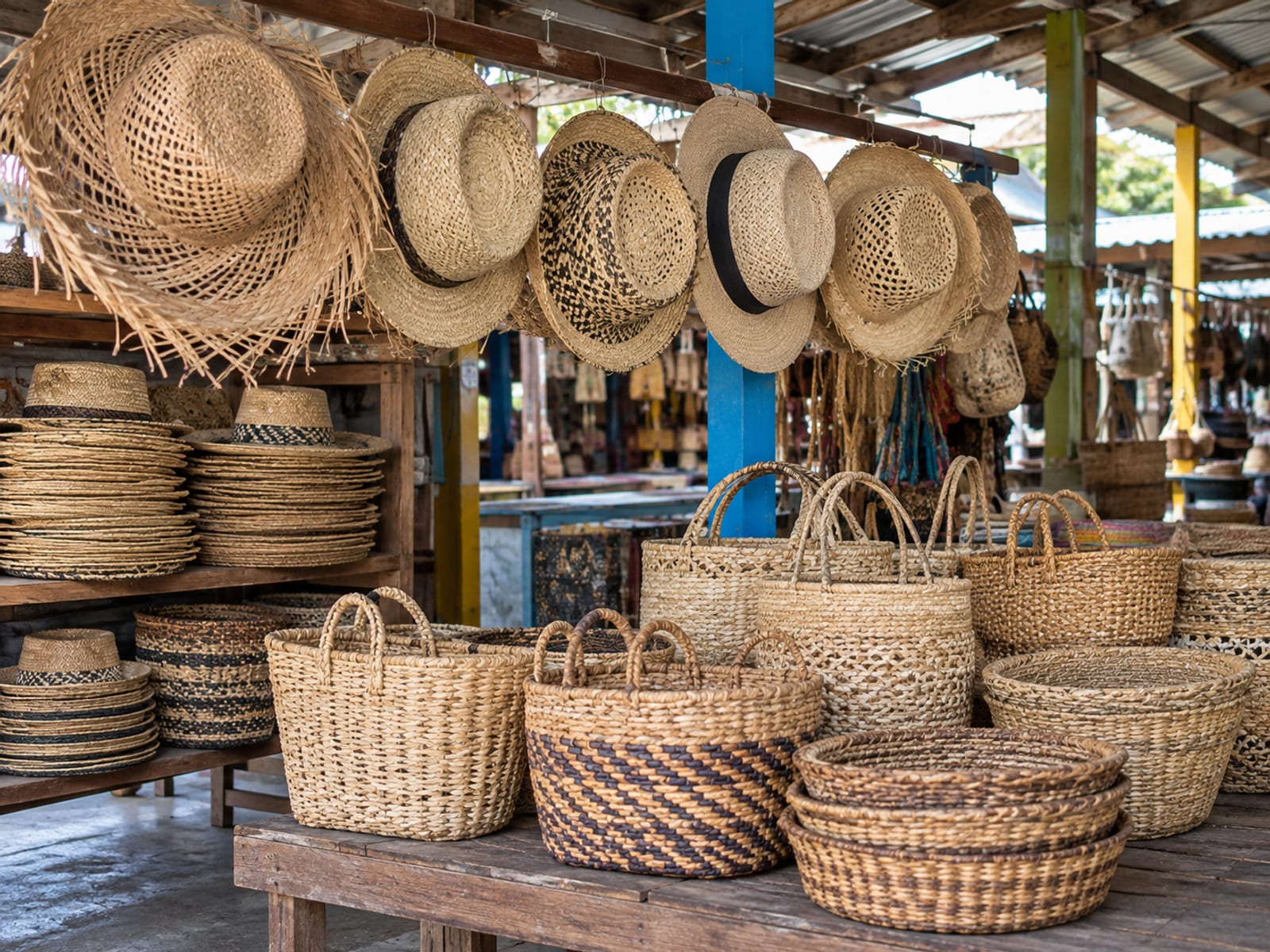
Ask whether the item was handmade locally or imported. For wood, shell, coral, feathers, skins or other animal and plant materials, ask whether the item has export documentation and whether a permit or CITES document is required.
Jamaica’s craft markets and shopping areas include Kingston Craft Market and Musgrave Market in Kingston, and Devon House and Things Jamaican in Kingston shopping areas. In Montego Bay, they include Harbour Street Craft Market, Old Fort Craft Market, Success Craft Market and Holiday Craft Market.
Main Street Rose Hall and The Collective are listed for crafts, Jamaican-made products, sauces, spices, clothing and premium goods. In Ocho Rios, the list includes Ocho Rios Craft Market, Pineapple Craft Market, Coconut Grove, Dunn’s River Craft Market and Olde Craft Market, and in Negril it includes Negril Craft Vendors and Rutland Point Craft Market.
The Jamaica Tourist Board identifies Kingston Craft Market at 174 Harbour Street in downtown Kingston and Ocho Rios Craft Market on Main Street. TPDCo’s craft-market information provides the designated-market locations.
For an errand in Kingston, use the Kingston stores directory. If your trip includes Montego Bay, the St. James stores directory can help you find nearby shopping areas. For Ocho Rios, use the St. Ann stores directory.
Choosing the right Jamaican shop
A supermarket is a practical place to compare coffee, sauces, spices, snacks, rum cake and packaged sweets. Browse supermarkets and grocery stores by parish and branch, then ask about the exact product and pack size.
A gift shop or craft market suits locally made jewellery, baskets, pottery, woodwork, paintings, clothing and presentation packs. The gift and souvenir shops directory can help you find shops by location. Ask about local production, materials, receipt details and export documents.
A liquor store is suited to rum and rum cream, subject to your destination’s alcohol rules. Use the liquor stores directory to find a branch in the area you are visiting, then ask about brand, bottle size, current price, GCT, payment and travel packing.
Wildlife, shells, plants and restricted materials
Protected wildlife and wildlife products are controlled under Jamaica’s Endangered Species legislation and CITES rules. Protected species, animal specimens, coral, certain shells, feathers, skins, ivory and products made from endangered species may require permits or may be prohibited.
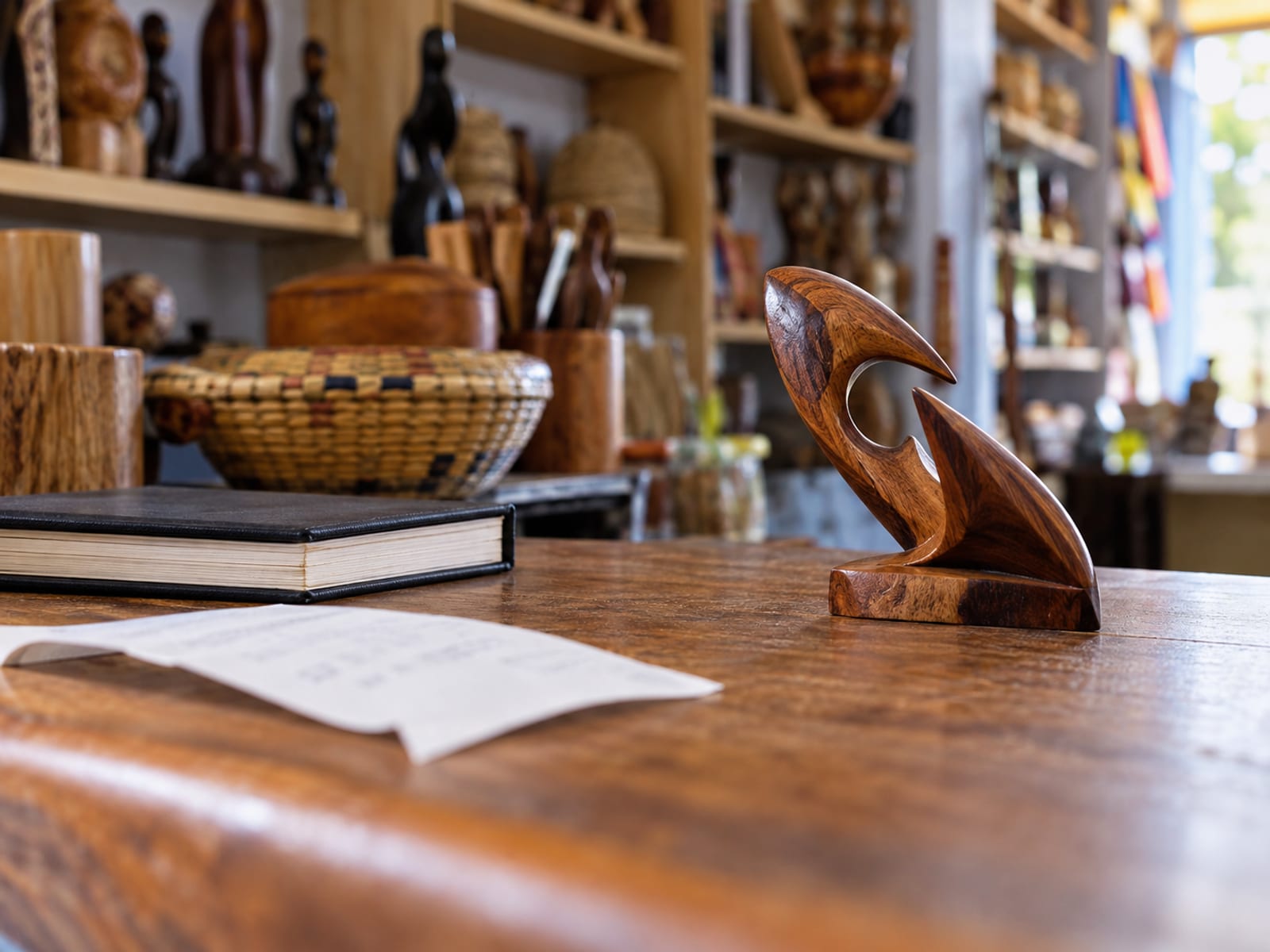
Queen conch shell and related by-products are specifically addressed in Jamaica’s Endangered Species regulations. A shell sold as a souvenir is not automatically legal to export. Ask whether it was legally sourced and whether an export or CITES permit is required.
Do not collect shells, coral, plants, animals or archaeological objects from beaches, parks or protected areas. Do not pack wildlife products unless the seller can provide the required documents. Jamaica Customs’ Prohibited and Restricted Items guide states that its list is not exhaustive and that rules may change.
For wildlife, shells, plants, agricultural items or cultural objects, contact Jamaica Customs, NEPA, the Ministry of Agriculture and Fisheries or Plant Quarantine before departure. The destination country may apply a separate rule when you arrive.
Comparing prices and pack sizes
A useful comparison keeps the brand, product, pack size, currency, tax treatment and date the same. Prices can vary by branch and may change without notice. A premium gift box should be compared with another premium gift box, while a standard supermarket pack should be compared with the same standard pack.
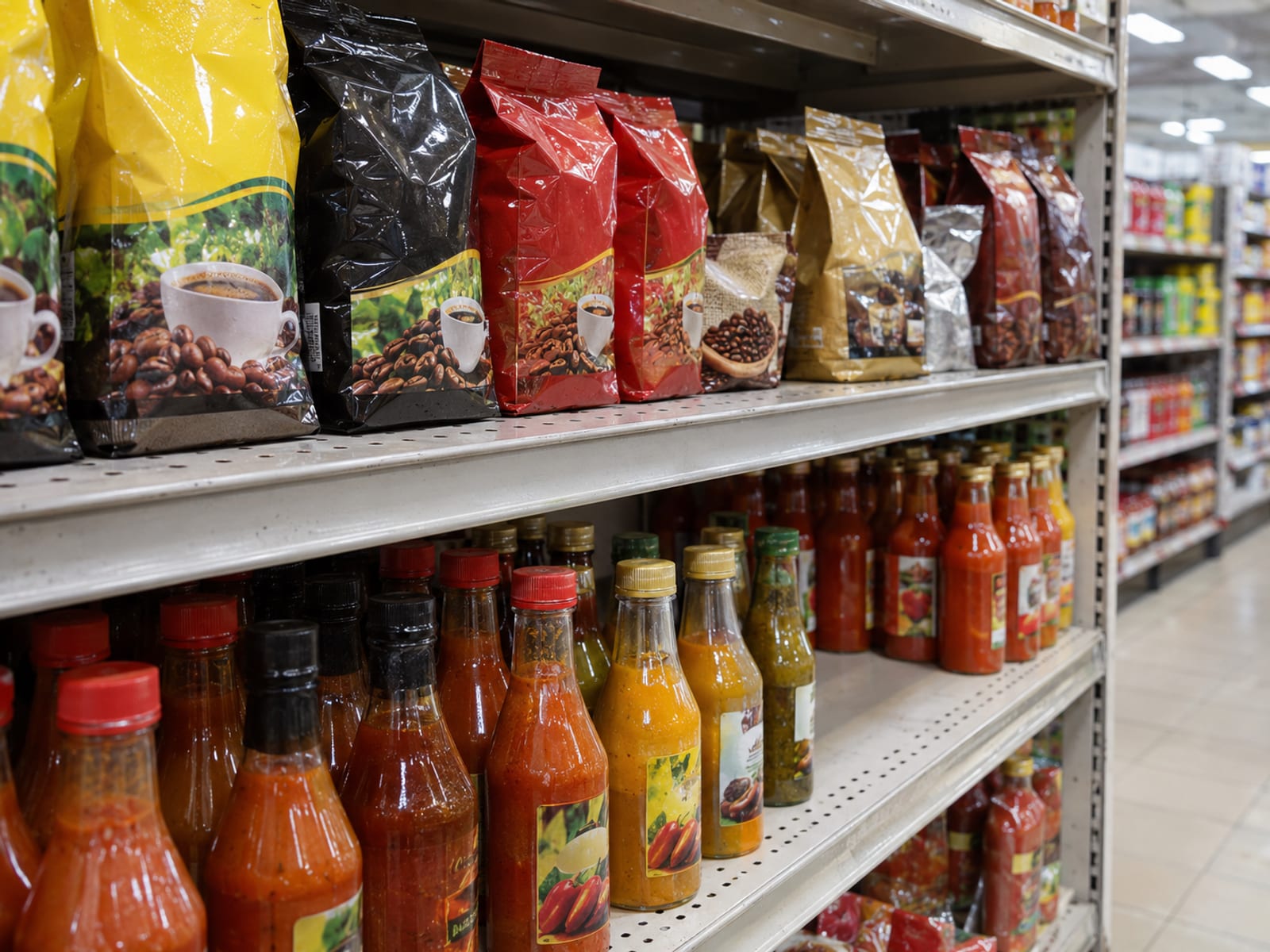
The Shop Jamaica online grocery listing includes Walkerswood Jerk Seasoning (280 g) and Pickapeppa Sauce (148 ml). Ask the branch for the current price of each, and ask PriceSmart Jamaica for the price of its Coffee Roasters 100% Jamaica Blue Mountain Ground Coffee with French Press (454 g).
Keep the item, size and currency beside every price. Ask whether GCT is included and whether the amount is for one item or a multipack. Ask for a receipt showing the product and price. Everyday shopping costs for visitors in US dollars put typical prices beside these.
For more household and grocery comparisons, see How to Compare Supermarket Prices in Jamaica and Grocery Prices in Jamaica: What Staples Cost in J$ and US$.
Questions to put to the branch
Before travelling for a specific purchase, ask whether the branch has this exact item in stock, and what brand, flavour, pack size and quantity it has. For coffee, ask whether it is 100% Jamaica Blue Mountain® coffee or a blend. Ask for the current price in J$ or US$ and whether GCT is included.
Ask what the expiry or best-before date is, and whether the product is refrigerated or shelf-stable. Ask which payment methods the branch accepts, whether it accepts foreign cards, and whether it can hold the item for collection. Ask too whether gift wrapping or protective packing is available.
For crafts, ask whether the item is handmade locally or imported, and whether a shell, wood or wildlife-derived craft has export documentation. Ask whether the holiday hours are different for this branch, and whether it can issue a receipt showing the product and price.
Common questions
What is worth buying in Jamaica?
Sealed Jamaica Blue Mountain® coffee, Jamaican High Mountain coffee, Walkerswood seasoning, Pickapeppa sauce, dried spices, rum cake, Jamaican sweets, rum and locally made crafts are practical choices. Check the destination rules first, then confirm the label, pack size, price and receipt.
What can I bring back from Jamaica to the United States?
Commonly practical choices include sealed coffee, packaged spices, commercially prepared sauces, tea, permitted honey, packaged sweets and commercially prepared rum cake. Declare all food and agricultural products, and check CBP or USDA APHIS rules for meat, fruit, vegetables, plants, seeds, soil and animal products.
What is something you can only get in Jamaica?
Genuine Jamaica Blue Mountain® coffee is the clearest example of a product tied to Jamaica’s regulated coffee system. Walkerswood, Pickapeppa, rum cake, Jamaican spices, rum and crafts are strongly associated with Jamaica, but they may also be sold internationally.
What are good gifts to bring from Jamaica?
Good gifts include sealed certified coffee, jerk seasoning, Pickapeppa sauce, pimento, nutmeg, ginger, rum cake, Jamaican sweets, rum where allowed, pottery, baskets, straw hats, crochet bags, wood carvings, paintings, jewellery and Jamaica-branded clothing. Ask about local production and export documents for crafts made with shell, wood, coral or animal materials.
What is the best thing to bring back from Jamaica?
The right choice depends on the recipient, luggage space and destination rules. Coffee suits a coffee drinker, sauces and spices suit a cook, and pottery, woven work, jewellery, woodwork or paintings make lasting non-food gifts.
What are you not allowed to bring back from Jamaica?
Common restricted categories include meat, fresh fruit and vegetables, plants, seeds, soil, dairy products, animal products, protected shells, coral, feathers, skins, ivory, endangered-species products and undocumented cultural objects. The exact rule depends on the destination, so declare the item and check the current border and Jamaican export requirements before packing.
For your final errand, use the directory page for the store type or parish where you are shopping, then contact the branch about the item, price and packing: Jamaica stores directory.